

4 min read

Passive income is every investor’s dream, except when it comes time to pay Uncle Sam. How much will you owe this tax season? In this article, we’ll break down the passive income tax rate for different types of investments, including rental properties, so you know what to expect before you file your 2026 return!
Disclaimer: This article is for informational purposes only and does not constitute tax, legal, or financial advice. Passive income tax rates vary by income type, jurisdiction, and individual circumstances, and are subject to change. Rent to Retirement does not provide personalized tax guidance. Consult a qualified tax professional or CPA before making decisions based on this content.
Summary:
- Passive income is usually taxed as ordinary income at your marginal tax rate, though high-income earners may face an additional 3.8% Net Investment Income Tax (NIIT).
- Rental properties and limited partnerships are often considered passive income, while capital gains and qualified dividends have different tax treatment.
- The IRS often uses material participation rules to distinguish passive income from active income.
- Real estate investors can reduce their taxable rental income with depreciation, interest write-offs, and other deductions.
How Is Passive Income Taxed?
Passive income—such as non-qualified dividends and rental property income—is generally taxed as ordinary income, meaning it is taxed at your marginal tax rate.
Unlike active income, passive income is not subject to payroll taxes, such as Social Security and Medicare. However, those who earn more than $200,000 (single) or $250,000 (filing jointly) may owe an additional Net Investment Income Tax (NIIT), taxed at 3.8%.
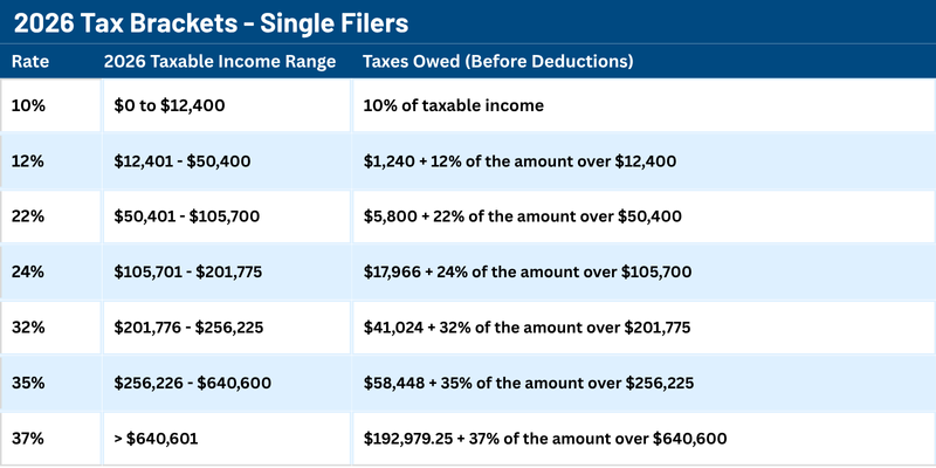
Source: https://millancpa.com/insights/2026-irs-tax-brackets-standard-deductions-capital-gains-amt
What Counts as “Passive Income”?
The IRS usually classifies the following activities as “passive income”:
Rental Property Income
This is the money you earn from a normal rental property with long-term tenants. Rental properties are not considered active investments unless you materially participate in the business, which we’ll get into later.
Browse cash-flowing turnkey rental properties with tax-advantaged income!

Limited Partnership Income
If you’re a limited partner in a business where you invest and get a share of the profits (like in a real estate syndication), that income is considered passive. In these types of partnerships, you’re typically only investing capital—not actively managing the business.
What Is NOT “Passive Income”?
The following are not usually considered “passive income,” according to the IRS:
Capital Gains
Capital gains are the profits you make from selling an investment, like a rental property. If you hold the investment for one year or less, it is taxed as ordinary income. If you hold it for longer than a year, it gets preferential tax treatment and is taxed at 0%, 15%, or 20%, depending on your taxable income that year.
Qualified Dividends
Most regular dividends are “qualified” dividends and are considered “investment income” or “portfolio income.” Like long-term capital gains, they are usually taxed at 0%, 15%, or 20%, depending on your taxable income that year.
Hands-On Airbnb Income
If you run an Airbnb and materially participate in the business, it may be considered active income. Typically, you’ll need to prove that your average stay was seven days or less, and that you were personally involved in services like daily cleaning, changing linens, etc.
Did you know Rent to Retirement offers 5%-down financing on select new build rentals?

Material Participation 101: Is Your Income Passive or Not?
Material participation is the standard the IRS uses to classify business income as active rather than passive and usually requires regular, continuous, and substantial involvement in the business. This dictates whether you can offset active income (like W-2 wages) or are instead restricted by passive activity loss rules.
Requirements vary depending on the type of investment. For normal rental properties, you’ll need to qualify for real estate professional status (REPs), meaning you meet both IRS requirements for that investment: over 750 hours and more than half of your work time spent in the business. Most landlords do not qualify for REPs, as tenants are long-term and many investors use services like property management, limiting their day-to-day involvement.
For more active businesses, like running an Airbnb property, material participation requirements are lower, and you do not need to qualify for REPs.
How to Lower Your Taxable Passive Income (on Paper!)
There are several rental property tax deductions you can use to lower your taxable passive income. Here are a few examples:
- Use Depreciation: Depreciation allows you to take an annual tax deduction over 27.5 years for normal wear and tear on a residential rental property. With tools like cost segregation studies, you can even accelerate some of that depreciation!
- Write Off Your Interest: Mortgage interest is also tax-deductible, which could amount to hundreds or thousands of dollars per month early on in your loan term.
- Hire (and Write Off) a Property Manager: While hiring a property manager is an extra expense, you can deduct it on your tax return. Plus, it saves you many hours!
- Deduct Repairs and Maintenance: Some rental properties require more maintenance than others, but the good news is that you can deduct these expenses. If you want lower repairs and maintenance, buy turnkey instead!
- …and more!
What Can “Offset” Passive Income?
Let’s say you own two rental properties. One has multiple repairs, creating a loss of -$5,000. The other is a turnkey property with low repairs and consistent passive income. If that property made you $10,000, you could use the $5,000 loss from the first property to only report $5,000 in passive income!
You cannot use your passive rental losses to offset active income (like from your W-2 job or business) unless you qualify for real estate professional status (REPs).
Get Passive Income with Fewer Taxes
The IRS considers most long-term rental properties “passive,” meaning they’re taxed at your marginal tax rate, whether you spend hours chasing down rent payments or own a more hands-off rental portfolio.
This makes turnkey rentals one of the best investments for passive income. These properties often come with property management in place and require less maintenance than older rental properties, allowing you to invest remotely and save on repairs. Plus, you can use depreciation, interest write-offs, and other deductions to pay far fewer taxes than many other passive income activities!
Passive Income Tax Rate FAQs
Do I Pay Tax on Passive Income?
Yes, passive income is typically taxed as ordinary income at your marginal tax rate. However, with deductions—like depreciation or mortgage interest on a rental property—you can significantly reduce your passive income tax liability!
What Is the IRS Rule for Passive Income?
The main IRS rule to remember is that you can only use passive losses to offset passive income—not active income, like from a W-2 job or business—unless you can prove “material participation.” For regular, long-term rental properties, you’ll need to qualify for real estate professional status (REPs), meaning you spend 750+ hours per year (and more than half of your total work time) in your real estate business.
How Does Passive Income Avoid Taxes?
Passive income doesn’t help you “avoid” taxes, but with depreciation deductions, you could create a “paper loss” that offsets some passive income. For example, suppose you own one rental property that has a paper loss of $3,000. If a second rental property made $6,000 in profit, you can apply the paper loss to that income and only pay taxes on $3,000!

6 Real Estate Tax Strategies and Tips Every Investor Should Know
Many people invest in real estate for its enormous tax benefits. Unfortunately, too many investors squander their potential tax savings by following...

6 Real Estate Tax Strategies Every Investor Should Know
Many people invest in real estate for its enormous tax benefits. Unfortunately, too many investors squander their potential tax savings by following...