
Why Now Is a Good Time to Invest in Single-family Homes
Whether you are new to real estate investing or have been growing your portfolio for years, changes in the economy and market conditions often cause...
5 min read
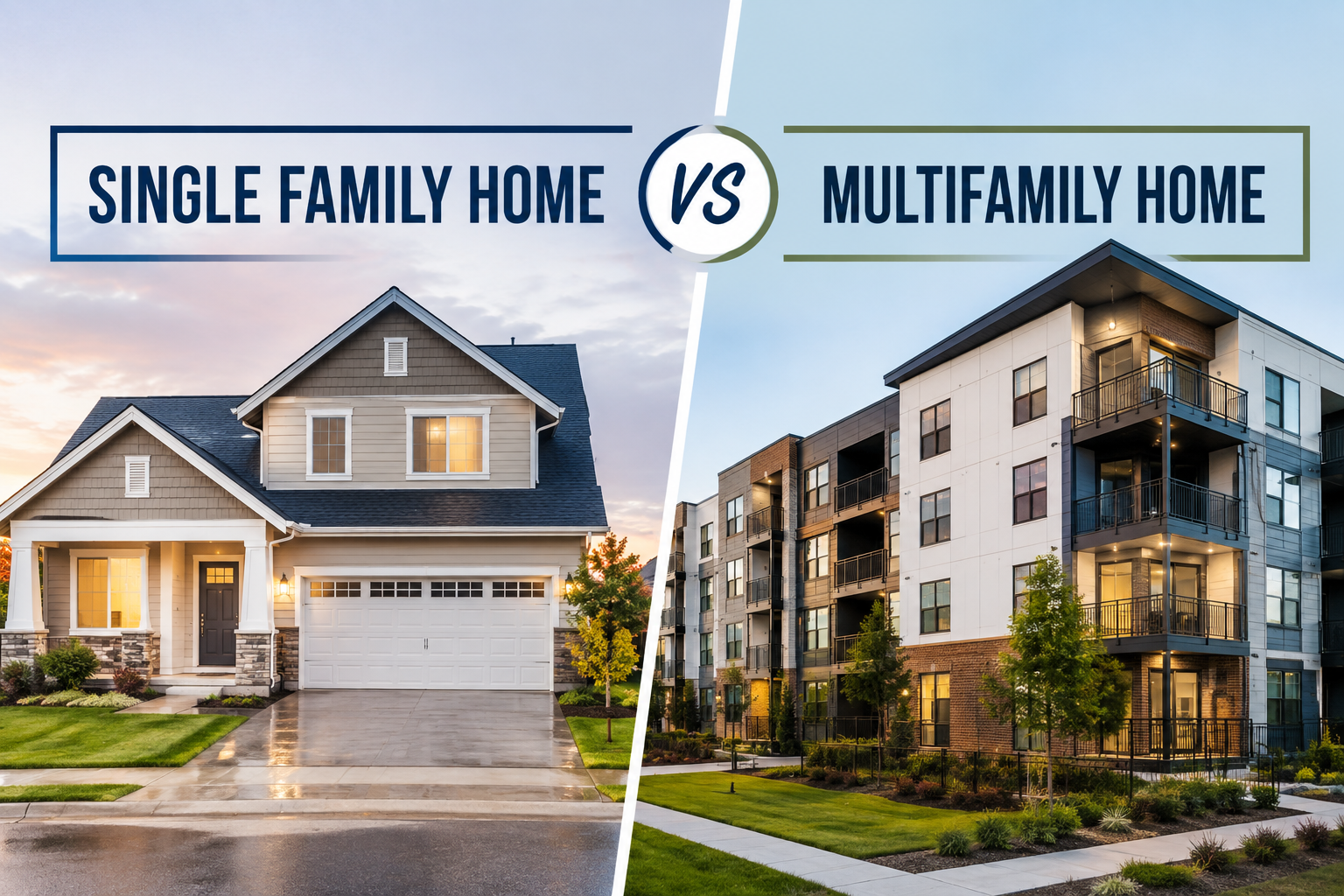
Buying a property and renting it out to tenants is one of the main ways people make money through real estate investing. Once you’ve decided you want to own rental properties, the next step is choosing between a single family home and multifamily home. You can build wealth with both types of rental properties, but each has its own pros and cons. In this article, we’ll help you make the right choice for your long-term goals!
Summary:
A single family home is a property designed to house one family. Traditional single family homes are freestanding, meaning they do not share walls with other units. However, a townhome or condo with shared walls may also be considered single family, as it is intended for one household, and the owner may own the home rather than the entire building.
Single family homes range from fully detached houses, bungalows, and cottages to attached residences with shared walls, like townhomes and condos. While these properties come in a range of shapes and sizes, they usually offer more exclusive use and privacy than many multifamily properties.
A multifamily home is a residential property that has multiple units under the same roof. Typically, each unit possesses its own entrance, kitchen, and bathroom(s). However, there may be shared utilities and common areas, such as hallways, breezeways, yards, and parking.
Apartments, condominiums, duplexes, triplexes, and fourplexes are all considered “multifamily,” but these properties are classified as “small” or “large” for financing and zoning purposes. Small multifamily properties have up to four units and qualify for residential financing, while large multifamily properties have five or more units and require commercial financing.
Single family and multifamily homes serve similar purposes, but there are several differences between the two. Let’s look at how these properties compare in terms of financing, management, investing risk, and other factors.
|
Factor |
Single Family |
Multifamily |
|
Number of units |
1 |
2+ |
|
Financing |
Conventional loan |
Conventional (2–4 units) / Commercial (5+) |
|
Management complexity |
Lower |
Higher |
|
Vacancy risk |
High (100% income loss) |
Lower (partial income loss) |
|
Entry cost |
Lower |
Higher |
|
Cash flow potential |
Lower |
Higher |
|
1031 exchange eligible |
Yes (if investment property) |
Yes |
Like any investment, a single family home has its own pros and cons. Make sure you know what you’re getting into before you buy!
Single family homes are often smaller than multifamily properties, so they may be more affordable and easier to finance. Since they only have one unit, they can also be simpler to manage. It’s also easier to pivot between long-term, mid-term, and short-term rental investment strategies, and if you need to sell your rental property, there may be more demand from normal homebuyers—not just investors!
Did you know Rent to Retirement offers 5%-down financing on select new-build rentals?

Keep in mind that when a single family home becomes vacant, you lose 100% of your rental income, so you’ll want to move quickly to keep it occupied. What’s more, single family homes may not cash flow in certain markets, so you’ll need to make sure you run the numbers (conservatively) and ensure the rental income can cover your mortgage payment and expenses! You can use our free rental property calculator to crunch the numbers!
A multifamily home may or not be the right option for you. Carefully weigh the pros and cons before buying one!
Because these homes have multiple units under the same roof, a 100% vacancy rate is rare. This means that when one tenant moves out, you’ve still got rent coming in from other tenants. Not to mention, these rental properties tend to make more than single family homes!
Multifamily is typically more expensive than single family, and if the property has five or more units, you’ll need to get a commercial loan, which may come with a higher interest and down payment requirement. With multiple households in the same building, you’ll also have to be mindful of potential disputes among tenants.
Browse cash-flowing single family and multifamily turnkey rentals for sale!

Financing is one of the most important aspects to consider before committing to single family or multifamily homes. Make sure you’ve got the right budget and financial profile to qualify for your property of choice:
Single family homes tend to be a little more affordable than multifamily properties and are often eligible for conventional financing. This could allow you to put less money down and get a lower interest rate.
You can use conventional financing for properties with up to four units. However, if your multifamily property has five or more units, you’ll need commercial financing. These loans often require larger investment property down payments, and qualification is weighted more toward the property’s income potential than your personal financial situation.
Get your first rental property for 5% down with Rent to Retirement’s select new-build financing!
Single family and multifamily homes can both be great real estate investments, and the best option for you largely depends on your budget, market, long-term goals, and appetite for management complexity.
You’re a first-time investor, with limited capital and experience, and aren’t in a rush to grow your portfolio. If you work a busy job or don’t want to be a hands-on landlord, buying a turnkey property with professional management in place can be a great option!
You have more capital, want stronger cash flow per property, or want reduced vacancy risk. These properties may also be a better fit for the more hands-on landlord who doesn’t mind managing multiple units!
No matter which option you choose, buying turnkey can make your real estate investing experience much easier. These properties are either new builds or renovated homes, so they require minimal maintenance during the first few years of ownership. Plus, they come with property management in place, so you can invest remotely in your single family or multifamily home!
Single Family Home vs Multifamily Home FAQs
A single-family home is a property that is designed for one household and typically has its own private amenities, such as yards, entrances, and parking space. A multifamily home may include several units under the same roof and have shared walls, common areas, yard, parking spaces, and other amenities.
Whether you should buy a single family or multifamily home depends on your budget, market, and investing goals. A single family home often suits a first-time investor with limited capital and experience as a landlord, while a multifamily home might suit the investor who’s looking to make more cash flow per property and scale their portfolio faster.
Apartments are multifamily properties. With five or more units, they often fall into the “large” multifamily bucket and require commercial financing.
Although a townhouse may share walls with other units, it is generally classified as a single family home. The owner usually owns not just the interior of the home but also the exterior of the unit and the land, even when the structure itself is attached to a larger building or adjected units.

Whether you are new to real estate investing or have been growing your portfolio for years, changes in the economy and market conditions often cause...

Home mortgages (or home loans), in principle, are not that complicated. You are borrowing money from an entity (typically a bank), which you then...

Whether you're a first-time home buyer, upgrading to a new primary residence, or buying your first rental property, getting to a house closing is...