
Will the Housing Market Crash in 2025? Here’s What the Data Says
With high mortgage rates, fluctuating inventory, and growing economic uncertainty, many are wondering: Will the housing market crash in 2025? In this...
5 min read
Will the housing market crash in 2026, or are we just experiencing a prolonged correction? In this article, we’ll break down the similarities and differences between current market conditions and those leading up to the 2008 housing market crash. We’ll also share what experts forecast for the housing market in 2026 and why many investors believe now is the time to buy!
Summary:
Ride out tough markets with day-one cash flow from turnkey rentals!

A housing market “crash” is a steep, rapid decline in home prices, usually of 20% or greater. A housing market “correction,” on the other hand, is often characterized by a home price decline of up to 10%. The last “crash” in the US was the 2008 housing crisis. The Case-Shiller Index, which tracks the purchase prices of residential homes, shows a decline of over 25% during that period.
Source: https://fred.stlouisfed.org/series/CSUSHPINSA
It’s fair to say we’re experiencing a housing market correction, as home prices have stagnated or fallen in some markets. While the following factors might suggest that a 2026 housing market crash is within the range of outcomes, there’s important context to consider:
High unemployment typically means fewer people can afford to buy homes and pay their mortgages. As homes sit on the market and many are foreclosed on, the rapid increase in supply can cause home values to fall. Unemployment is still relatively low in 2026, but it is rising.
Source: https://www.bls.gov/charts/employment-situation/civilian-unemployment-rate.htm
An oversupply of properties tends to drive home prices down. Housing inventory has risen well above pandemic levels in recent years, but it is still below even 2017 standards.
Source: https://fred.stlouisfed.org/series/ACTLISCOUUS
Rising consumer debt often means more Americans are struggling to pay bills, including their mortgages. While housing debt is steadily rising, mortgage delinquency is still at rock-bottom levels.
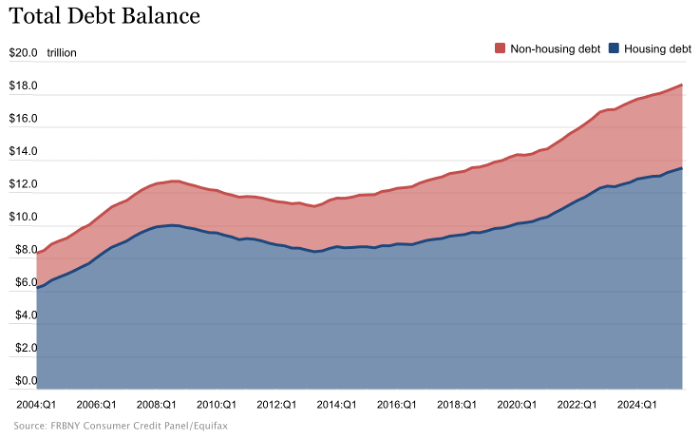

Source: https://www.newyorkfed.org/microeconomics/hhdc
While these signs are worth watching, they do not constitute a housing crash. These issues would need to worsen, and several other dominoes would need to fall before a crash becomes a major concern.
While the housing market may be correcting, we’re unlikely to see a housing crash like the one we saw back in 2008. There are multiple reasons for this:
The 2008 housing crisis was largely caused by risky lending practices, where mortgages were given to deep subprime borrowers (those with credit scores below 580), with banks speculating that home prices would continue to rise. This is very different from recent years, where subprime mortgages have hovered around their historical low.
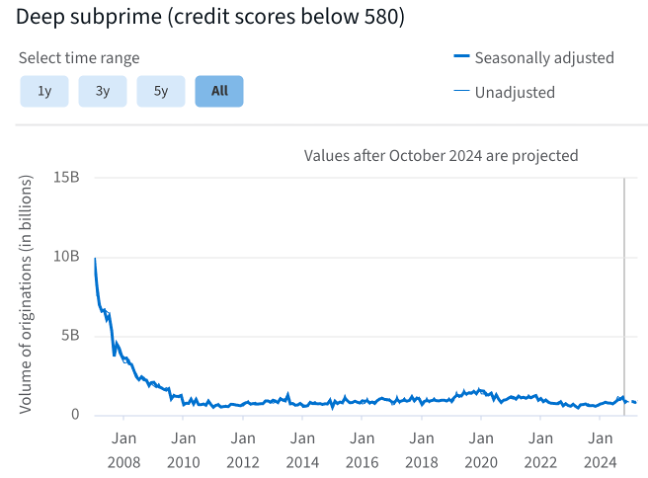
Forced selling drove the 2008 housing crash, as overleveraged borrowers with high mortgage payments (and floating interest rates) and either low or no income were foreclosed on. Today, more than half of homeowners have rates at or under 4%. Combine this with the high creditworthiness shown in the previous section, and it’s hard to see any forced selling.
Lock in a lower interest rate (as low as 3.99%) on your next new-build rental with Rent to Retirement!

We had mass foreclosures in 2008, but today, delinquency rates remain very low for residential mortgages. They rose slightly following the moratoriums of 2020, but are still a fraction of what they were in 2008.
Source: https://fred.stlouisfed.org/series/DRSFRMACBS
What’s the likelihood of a housing market crash in 2026? Let’s take a look at what industry experts are saying about the potential of a crash:
As of December 2025, Zillow is forecasting a modest 1.2% increase in home values for 2026, causing fewer homeowners to lose equity in their homes. Experts also expect 4.26 million home sales, a 4.3% increase from 2025.
Redfin anticipates more home sales in 2026, a 3% improvement from 2025. Home affordability is also expected to improve, with mortgage rates dipping to the low-6% range and rising wages slightly outperforming rising home prices.
Realtor expects interest rates to hold around 6.3% in 2026. While median home prices could appreciate by 2.2%, giving current owners more home equity, experts also foresee incomes outpacing both inflation and home prices—making homeownership more affordable for many.
While higher interest rates and stagnant home prices are currently keeping many buyers in limbo, smart investors are still buying rental properties in 2026. Here are some key reasons why:
In hot markets, investors have less negotiating power and may even need to offer over asking to buy a property. Since fewer buyers are competing for properties today, many buyer's markets have emerged, and it’s significantly easier to find great real estate deals at a discount!
Housing inventory is up, so some builders are offering concessions in order to offload some of their properties. Get a lower purchase price, cash back at closing, lower closing costs, or an interest rate buydown with Rent to Retirement’s exclusive new build incentives!
While mortgage rates haven’t returned to the low levels we saw back in 2020-2021 (which we may never see again), they have steadily decreased since spiking in 2023. You could buy at a great price today and refinance if rates continue to fall!
The US is short 4.7 million homes. Meanwhile, homeownership is still unattainable for many Americans, creating strong demand for long-term rentals. Home values have decreased in some markets, but have a long track record of increasing over time, so buying the current dip could allow you to benefit from the appreciation.
Before a housing crash, several concerning signs begin to emerge. It’s worth noting that none of these things have occurred yet:
With many industry experts believing the housing market is much more likely to rebound than collapse in the years ahead, now could be a great time to invest in real estate. The best part? You don’t need to be an expert! Turnkey rentals make it easy for anyone to invest in cash-flowing real estate.
Rent to Retirement operates in over a dozen different markets, including some of the best places to buy rental properties, with homes that often come with property management and tenants already in place. This allows you to invest in real estate passively (or semi-passively) and lock in returns that meet your financial goals—without giving you another job!
Many experts are forecasting home price growth, more sales, and mortgage rates that hold steady (or ease slightly) in 2026. This means you could buy a property at a great price today and refinance down the road, all while taking advantage of future appreciation!
It’s impossible to know whether a recession will arrive in 2026, as most recessions are only called after they have occurred. However, some economists expect a turbulent economy due to AI, tariffs, rising consumer debt, and other issues.
The median price of homes sold has decreased slightly since late 2022 due to factors like high mortgage rates and decreased buyer demand. However, simple supply and demand suggests that if mortgage rates drop (increasing demand) but supply remains the same, or demand outpaces supply, a significant price drop is unlikely.

With high mortgage rates, fluctuating inventory, and growing economic uncertainty, many are wondering: Will the housing market crash in 2025? In this...

It’s been a difficult few years for real estate investors. Is now a good time to invest in real estate, or should you wait it out for another 12...
Job layoffs and decreased consumer spending are hallmarks of an economic downturn, but what happens to the housing market during a recession? Should...