
Types of Rental Properties: Which is the Best Investment?
Navigating the complex world of rental properties can feel overwhelming, but understanding the various types of rentals available is crucial for...
8 min read
Do you want a low-maintenance rental property that commands higher rents and gives you more cash flow? A build-to-rent investment could be your answer. Keep reading to learn more about these new construction homes, why they’re so popular in 2026, the pros and cons of buying one, and how they compare to other rentals!
Summary:
Build-to-rent investments combine the best parts of single-family rentals and new-construction homes. These investment properties are new construction homes, which are built with the specific purpose of becoming rental properties. Build-to-rent investors enjoy the cost savings and low maintenance of a new home with usually top-of-the-market rent for their area.
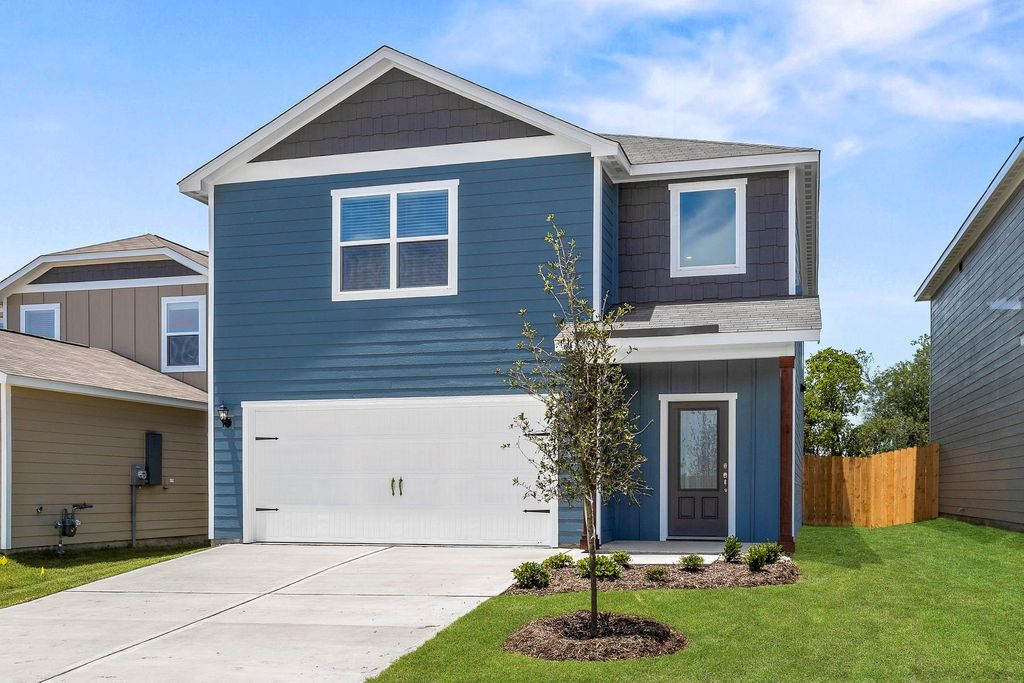
The combination of high interest rates and soaring home prices has made homeownership unattainable for many Americans. Although monthly rent is more affordable than a mortgage payment in many areas of the US, many renters want to experience the typical suburban lifestyle while they are unable to buy a home. Build-to-rent, single-family homes fill this need; as a result, build-to-rent home starts have risen by 134% since 2019.
After your home is built, it could appraise for more than what you paid for it. This difference in value means instant equity for you, the investor!
Looking for build-to-rent investments?

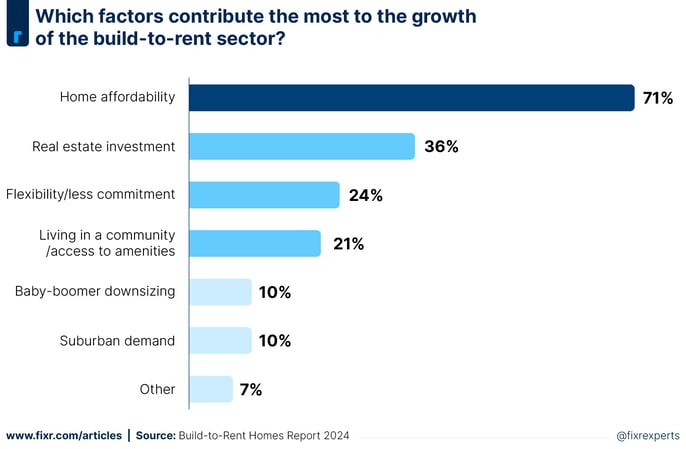
Renting is cheaper than homeownership in many areas of the US, but many renters want to live in a nicer and more private space than that of a typical apartment building. So, they rent a build-to-rent home instead!
Source: https://www.fixr.com/articles/build-to-rent-homes
Millennials now make up the largest share of the US workforce. As many struggle with the high costs of homeownership in 2026, they are driving the demand for build-to-rent single-family homes.

Source: https://www.fixr.com/articles/build-to-rent-homes
Today, renters want access to certain amenities that most privately owned, single-family homes don’t have. Build-to-rent communities blend the best of renting and homeownership, giving tenants detached living spaces with shared amenities like pools, gyms, clubhouses, etc.
Build-to-rent construction is concentrated in fast-growing Sun Belt metros. According to a Point2 Homes analysis cited by Fixr, these metros delivered the most BTR completions in 2024:
Florida, Alabama, and Georgia markets also posted record or five-year-high deliveries:
Many of these states overlap with where Rent to Retirement offers turnkey properties, including Florida, Texas, Alabama, Georgia, and North Carolina!
A build-to-rent community works much like the average neighborhood or homeowners’ association, with the exception that these homes are often owned and managed (and even sold) as a single property. Although each home is detached, renters share amenities, such as pools, gyms, and other recreational spaces. What’s more, community managers often provide opportunities for renters to socialize through hosted events and networking opportunities.
Most build-to-rent communities are owned by a single operator, and every home on the street is a rental. Rent to Retirement’s new builds are typically in neighborhoods where about 70% or more of the homes are owner-occupied. That gives you a few advantages:
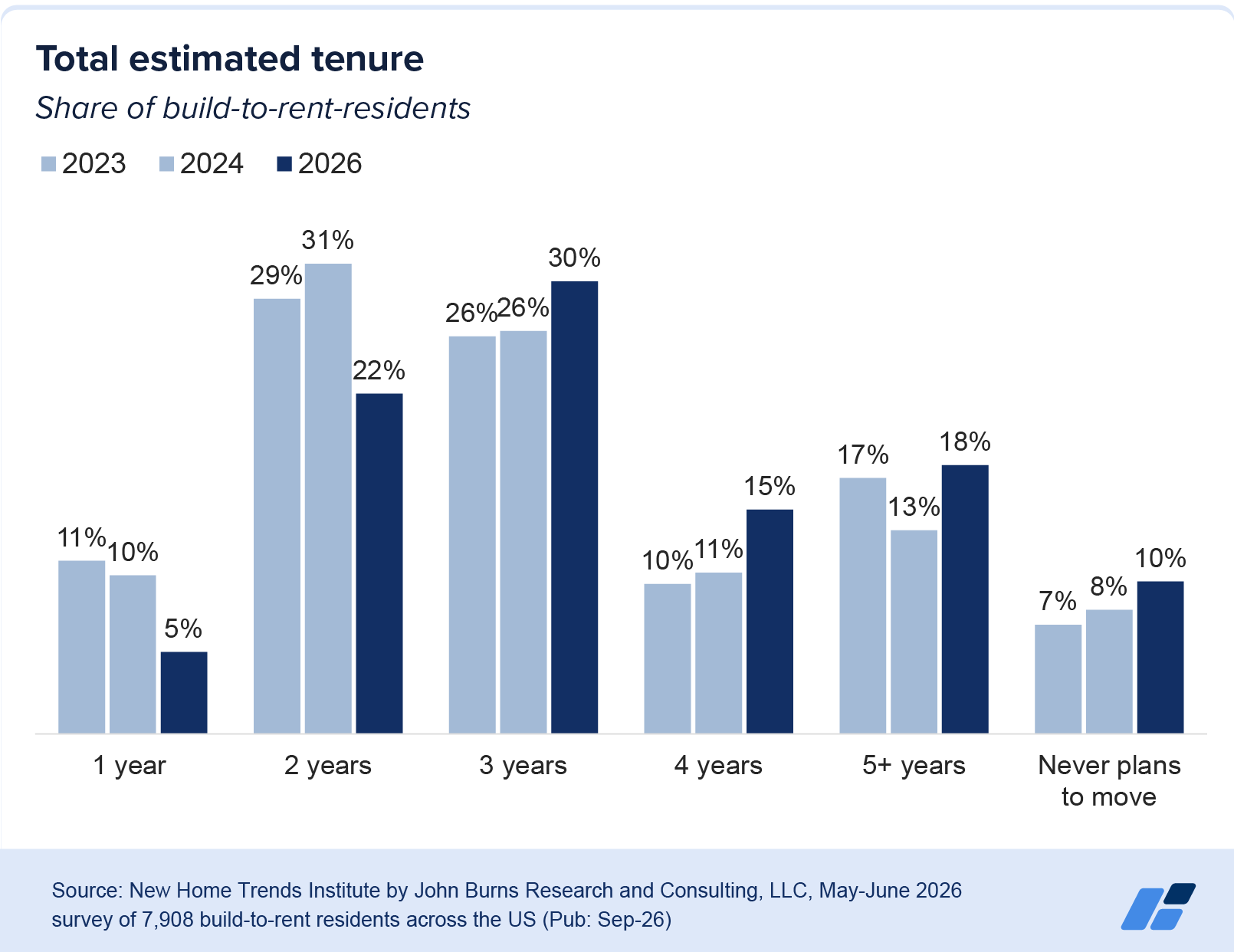
Build-to-rent residents are staying put, and that matters to anyone who owns a rental. A September 2026 survey of nearly 8,000 BTR residents by John Burns Research and Consulting found that 73% expect to stay in their current home for three years or more. That’s up from 58% in 2024. Over the same period, the share planning to move within one or two years fell from 41% to 27%.
Two very different groups are driving that shift.
Among mature singles and couples, 55% now say they prefer renting, up from 46% in 2024. Nearly half expect to stay in their current home at least five years or never move. And 40% say cheaper rent somewhere else wouldn’t be enough to make them leave. For these renters, a newer, low-maintenance home is a lifestyle choice, not a stopgap.
 Source: https://jbrec.com/insights/btr-renter-retention-longer-tenure/
Younger households and families mostly move into BTR homes to get more space and a better location. Among residents who still plan to buy or are undecided, 30% say their biggest hurdle is finding an affordable home in the area they want. That’s more than twice the share who point to the down payment. Until that changes, a new single-family rental in the right neighborhood fills the gap, potentially for years.
 Source: https://jbrec.com/insights/btr-renter-retention-longer-tenure/
Every turnover costs you: vacant months, make-ready repairs, and leasing fees. A tenant who renews year after year keeps more of your rent working for you. JBREC’s advice to operators is to build longer stays into underwriting assumptions instead of treating retention as a nice-to-have. The same logic applies when you’re running the numbers on a single rental.
There’s a flip side. A tenant who stays five years puts five years of wear on the flooring, paint, and fixtures. Two things work in your favor here:
Build-to-rent presents an enormous opportunity for investors in 2026 and beyond, but like any investing strategy, it’s not for everyone. If you're asking yourself, "Is buying a new build a good investment?" the pros and cons below should help you make your decision.
These build-to-rent advantages create significant cost savings for investors, allowing them to keep more of their cash flow:
Renters want modern floor plans, new appliances, and clean living spaces—an advantage new builds have over existing homes. This makes it easier to not only find tenants but also command higher rents!
These new construction homes have brand-new systems and appliances, which means that you’ll pay less for maintenance and repairs. This will allow you to pay less out of pocket over the first few years and hang on to more of your cash flow.
Some build-to-rent investors may benefit from an increase in home value between the time they go under contract and the time their homes are appraised.
Older homes tend to bear the brunt of a big insurance spike. Because new homes are built to modern-day code, they aren’t as affected. What’s more, many insurance companies offer certain programs and discounts for new builds!
Builders may be motivated to “buy down” your interest rate to get inventory off their books. This could give you an even lower mortgage payment!
Rent to Retirement has financing options that allow investors to buy select new build-to-rent investments for as low as 5% down!

BTR renters are staying longer than they used to. Nearly three-quarters now plan to stay three years or more. Fewer turnovers mean less vacancy, fewer make-ready costs, and steadier cash flow.
 Source: https://jbrec.com/insights/btr-renter-retention-longer-tenure/
There are many reasons to invest in build-to-rent homes, but don’t overlook the potential drawbacks:
In the past, new construction homes have been more expensive than older homes in the same area. However, this trend has flipped in recent years, and new homes are now cheaper than many existing homes!
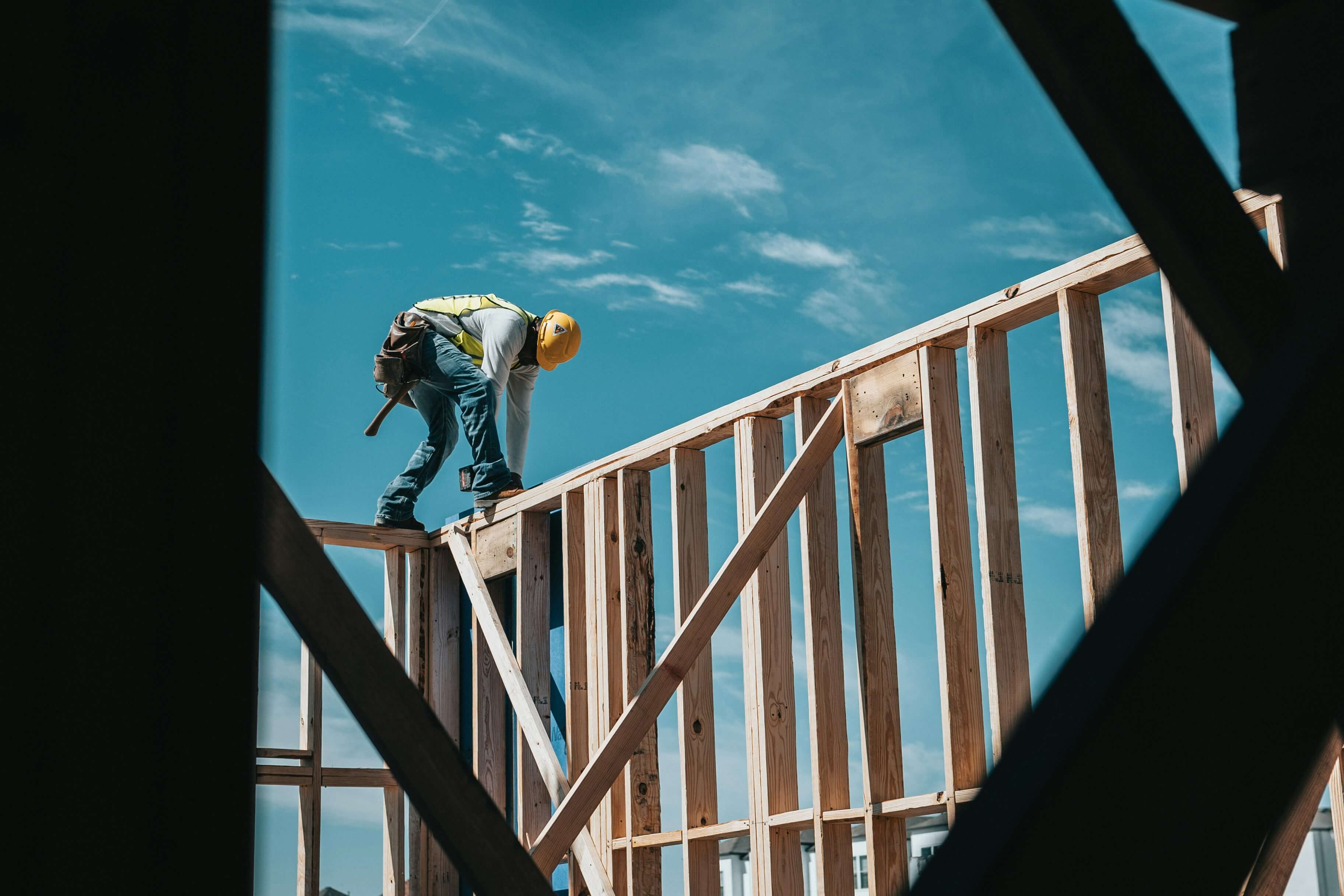
If you’re working with a builder, you’ll have to wait to reap the fruits of build-to-rent investing. Don’t want to deal with long project timelines or delays? Rent to Retirement has newly built turnkey rentals that you can rent out for a profit today!
Before you buy a property, you need to make sure it will deliver a solid return. How do build-to-rent investments compare to the average rental property?
Let’s look at two properties in the same market to demonstrate the potential difference in cash flow.
First, let’s break down the numbers for this turnkey, single-family rental:
After debt service and expenses, this property will cash flow $153 per month!
Now, let’s check out the numbers on this existing property:
After debt service and expenses, this property will have a negative cash flow of -$212/month.
In this instance, buying a turnkey, build-to-rent home instead of an existing property could produce a $350+ swing in monthly cash flow!
Browse cash-flowing turnkey real estate!
Looking to buy a new build as your next investment? Here are three ways to get your hands on a build-to-rent property:
Buying a newly built home directly from a builder or turnkey provider is the fastest path to getting your property rented out. When you buy from a turnkey real estate company like Rent to Retirement, there are no long waits, many homes are already leased at closing, and you have a trusted property manager on board!
Schedule a consultation with our team!
If you plan to build a new construction home and rent it out, you’ll need to work with a builder to bring your vision to life. Keep in mind that this process could involve a lengthy wait time, and the upfront costs may be significant.
A syndication allows you to passively invest in a portfolio of build-to-rent homes. As the properties perform, you’ll receive your share of the profit. You’ll need to be a high-income earner (and an accredited investor), and you won’t control the properties, but you also won’t have to deal with the ins and outs of management!
With less maintenance, fewer repairs, longer tenant stays, easier cash flow, and the potential for instant equity on day one, it’s easy to see why build-to-rent homes are on the rise. Not to mention, they’re even cheaper than the existing homes in many markets.
Ready to start shopping for a new build? Rent to Retirement has turnkey, new-build homes available in markets across the nation!
Building a rental could be a great investment if you don’t mind a long wait time. If you’d rather buy a property that you can rent out today, consider a newly built home or turnkey rental instead!
The biggest drawbacks of build-to-rent homes are the long wait times for new builds and potentially higher home costs. This isn’t always the case, however, as many build-to-rent homes are cheaper than existing homes in 2026.
Yes, new construction homes typically have lower maintenance and repair costs during the first few years of ownership. Unlike existing homes with many years of wear and tear, build-to-rent homes are equipped with new systems and appliances that require very little upkeep.
Longer than they used to. A 2026 John Burns Research and Consulting survey found that 73% of BTR residents expect to stay three years or more, up from 58% in 2024. Mature renters who prefer renting, and young families who need more space than they can afford to buy, are driving the trend.

Navigating the complex world of rental properties can feel overwhelming, but understanding the various types of rentals available is crucial for...
Likely the best aspect of investing in real estate is that you have many different options on how to make these investments. Many investors go with...
